
Roles in Construction
We all know about the trade roles available in construction: carpenters, bricklayers, electricians, but there is more to the industry than meets the eye
Do you want to learn more about where the world of construction could take you? You've come to the right place! We've provided snapshots below of some of the key roles in construction that you may not be aware of, and their attributes
If you'd like even further information about a particular role, click the link next to 'Formal Qualifications/Accreditation' or the link next to 'For more information please visit:'

Structural Engineer
The Structural Engineer is a key component in the construction process. Part of the wider discipline of Civil Engineering, Structural Engineering is concerned with the design and physical integrity of buildings and other large structures, like tunnels and bridges.
Qualifications:
3-year bachelor's or engineering degree, or a 4-year master's or engineering degree.
Formal accreditation: https://share.google/E7Uj1O3Aqeidfzt36
Salary:
Starting: £24,000
Experienced: £70,000
(Please note that these salaries are taken from Explore careers | National Careers Service and are not specific to what our business pays.)
Hours: 37- 42 hours
The hours you will typically work will be anytime from 8 am-6 pm
Civil Engineer
Civil Engineers have the important role of planning, designing and managing construction projects such as roads, railroads, airports, bridges, harbours, channels, dams, irrigation projects, pipelines, power plants, and water and sewage systems.
Qualifications:
3-year Bachelor of Engineering Degree or 4 years master’s degree in Civil Engineering. To get on a degree course, you need at least 5 GCSEs (grade 9 to 4) and 3 A-levels, including Mathematics and a science subject, normally Physics.
Formal accreditation: https://share.google/fPMMV76yIu4mLlbWQ
Salary:
starting: £29,000
experienced: £70,000
(Please note that these salaries are taken from Explore careers | National Careers Service and are not specific to what our business pays.)
Hours: 40-42 hours
The hours you will typically work will be weekdays, as well as evenings and weekends, for projects operating in quieter times


Construction Manager
Construction Managers are a part of the building process from the very beginning, working closely with Architects and Engineers to go over plans and blueprints, making timetables for the project, determining material and labour costs, hiring subcontractors for the project and ensuring health and safety standards are met.
Qualifications:
Degree or a Higher National Certificate (HND) in a relevant subject. This could be Construction, Civil Engineering, Construction Management, Architecture or Building Surveying. As a school leaver, you can apply through CITB for a Modern Apprenticeship. You will need at least 5 GSCE’s including Mathematics, English, and a science or technological subject.
Formal Qualification/Accreditation: Chartered Institute of Building
Salary:
Starting: £27,000
Experienced: £80,000
(Please note that these salaries are taken from Explore careers | National Careers Service and are not specific to what our business pays.)
Hours: 41-43 hours
You will typically work weekdays, but occasionally evenings and weekends. You should also expect that this might mean working away from home
Quantity Surveyor
Quantity Surveyors are responsible for managing all aspects of the contractual and financial side of construction projects.
Qualifications:
A relevant degree in Quantity Surveying or follow a work-based route, completing a Surveying Apprenticeship. You can follow this with a degree accredited by the Royal Institution of Chartered Surveyors and the Chartered Institute of Building (CIOB).
Formal Qualifications/Accreditation: Royal Institution of Chartered Surveyors
Salary:
Starting: £25,000
Experienced: £80,000
(Please note that these salaries are taken from Explore careers | National Careers Service and are not specific to what our business pays.)
Hours: 37-40 hours a week
You will typically expect to work weekdays, but occasionally might work on weekends and evenings.


Site Supervisor
A Site Manager will oversee operations on a day-to-day basis and ensure that work is done safely, on time and within budget and to the right quality standards.
Qualifications:
Foundation degree, HND or degree accreditation by the Chartered Institute of Building (CIOB) in a relevant subject, Civil Engineering, Structural Engineering, Building Surveying, Building Engineering or Construction Studies.
Formal Qualifications/Accreditation: Chartered Institute of Building
Salary:
Starting: £25,000
Experienced: £70,000
(Please note that these salaries are taken from Explore careers | National Careers Service and are not specific to what our business pays.)
Hours: 44-46 hours a week
You can expect to work weekdays, as well as potentially work evenings and weekends, as well as working away from home.
Buyer
Buyers are responsible for ensuring that the materials required for construction projects are provided on schedule and according to projected budgets.
Qualifications:
No formal qualifications required; however, you may want to complete GCSEs in Mathematics and English. An NVQ or HND in a construction-related subject, such as a Diploma Level 3 NVQ in Construction Management, would be highly advantageous.
Formal Qualifications/Accreditation: Institute of Supply Chain Management
Salary:
Starting: £28,000
Experienced: £60,000
(Please note that these salaries are taken from Explore careers | National Careers Service and are not specific to what our business pays.)
Hours: 38-42 hours a week
You can expect to work weekdays between 8 am and 6 pm.

Architect
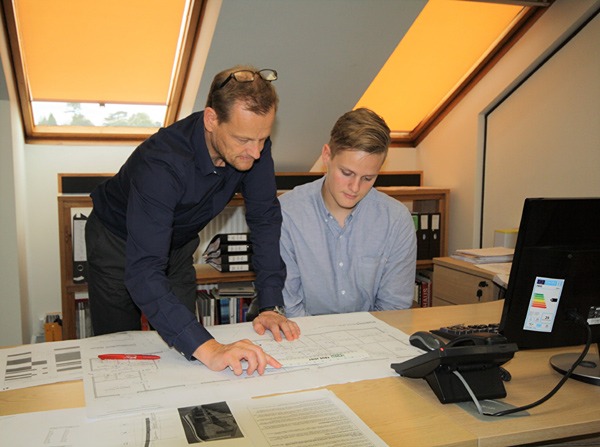
An Architect will meet with Clients to discuss project objectives, needs and budget. Preparing and presenting design proposals, including detailed drawings of finished buildings, renovations or restorations; working with computer-aided design software to create blueprints and images.
Qualifications:
5-year university course recognised by the Architects Registration Board (ARB) followed by at least 2 years’ professional experience. At least 5 GCSEs (grade 9 to 4) including Mathematics, English, and Physics or Chemistry, plus 3 A Levels (some universities like this to include Mathematics or a science subject).
Formal Qualifications/Accreditation: Royal Institute of British Architects
Salary:
Starting: £44,000
Experienced: £85,000
(Please note that these salaries are taken from Explore careers | National Careers Service and are not specific to what our business pays.)
Hours: 35-40 hours a week
These hours are typically weekdays, occasionally weekends and evenings
Estimator
Estimators calculate how much it costs to supply products or services to a client before building works can start.
Qualifications:
No set academic entry requirements to train as an Estimator, but GCSEs (grade 9 to 4) in Science, Technology, English and Mathematics would be useful. An IT qualification is also good to have. You could study for a BTEC HNC/HND in subject areas such as Structural Engineering, Civil Engineering or Construction.
Formal Qualification/Accreditation: Chartered Institute of Building
Salary:
Starting: £22,000
Experienced: £60,000
(Please note that these salaries are taken from Explore careers | National Careers Service and are not specific to what our business pays.)
Hours: 37-40 hours
You can expect to work weekdays and possibly evenings and weekends.


Bricklayer
Bricklayers build houses, repair walls and chimneys and refurbish decorative stonework. They also work on heritage and restoration projects.
Qualifications:
You will need to complete either a level 2 or level 3 in bricklaying. This can be done either as an apprenticeship or a college course. To access the courses, the entry requirements vary, but the average is 4 or 5 GCSEs at grades 9 to 4 (A* to C), or equivalent, including English and maths for a T-level.
For more information, visit: https://nationalcareers.service.gov.uk/job-profiles/bricklayer
Salary:
starting: £25,000
experienced: £45,000
(Please note that these salaries are taken from Explore careers | National Careers Service and are not specific to what our business pays.)
Hours: 40-44 hours a week
You can expect to work in the hours of 8 am and 6 pm, and possibly away from home.
Plumbing
Plumbers install and repair water and heating systems in residential households and commercial properties.
Qualifications:
You will need to complete a course in college, an apprenticeship or apply directly to a job vacancy. Completing a course will help land you a trainee position at a plumbing company. Entry requirements for these courses will vary, but the average is 4 or 5 GCSEs at grades 9 to 4 (A* to C), or equivalent, including English and maths for a T-level.
For more information, visit: https://nationalcareers.service.gov.uk/job-profiles/plumber
Salary:
starting: £24,000
Experienced: £46,000
(Please note that these salaries are taken from Explore careers | National Careers Service and are not specific to what our business pays.)
Hours: 37-40 hours a week
You can expect to work at any time, as this job is based on customer demand.


Electrician
Electricians install power, lighting and renewable technologies in buildings. They also inspect and repair electrical control systems and machinery.
Qualifications:
You can get this job through a college course, an apprenticeship, a work accreditation scheme or by applying directly. Entry requirements for college courses will vary, but the average requirements are 4 or 5 GCSEs at grades 9 to 4 (A* to C), or equivalent, including English and maths for a T-level.
For more information, visit: https://nationalcareers.service.gov.uk/job-profiles/electrician
Salary:
starting: £26,000
Experienced: £45,000
(Please note that these salaries are taken from Explore careers | National Careers Service and are not specific to what our business pays.)
Hours: 37-45 hours a week
You can expect to work varied hours as you are typically on call for jobs.
Carpenter
Carpenters make, install and repair wooden items like wall panels, flooring, door and window frames, roof rafters, staircases, cabinets and furniture.
Qualifications:
You can get this job through a college course or an apprenticeship. There are a couple of courses such as bench joinery, site carpentry and T-level in On-Site Construction. Entry requirements for college courses will vary, but the average is 4 or 5 GCSEs at grades 9 to 4 (A* to C), or equivalent, including English and maths for a T-level.
For more information, visit: https://nationalcareers.service.gov.uk/job-profiles/carpenter
Salary:
starting: £24,000
Experienced: £40,000
(Please note that these salaries are taken from Explore careers | National Careers Service and are not specific to what our business pays.)
Hours: 40-45 hours a week
You can expect to work weekdays as well as weekends and evenings.


Wood Machinists
Wood machinists cut and shape timber for products like cabinets, staircases, mouldings and frames for doors and windows.
Qualifications:
You can access this job through courses such as basic construction skills, carpentry and joinery and wood machining. There are no set entry requirements, so they will vary.
For more information, visit: https://nationalcareers.service.gov.uk/job-profiles/wood-machinist
Salary:
starting: £23,000
experienced: £31,000
(Please note that these salaries are taken from Explore careers | National Careers Service and are not specific to what our business pays.)
Hours: 40-43 hours a week
You can expect to work weekdays as well as weekends and evenings.
Groundworker
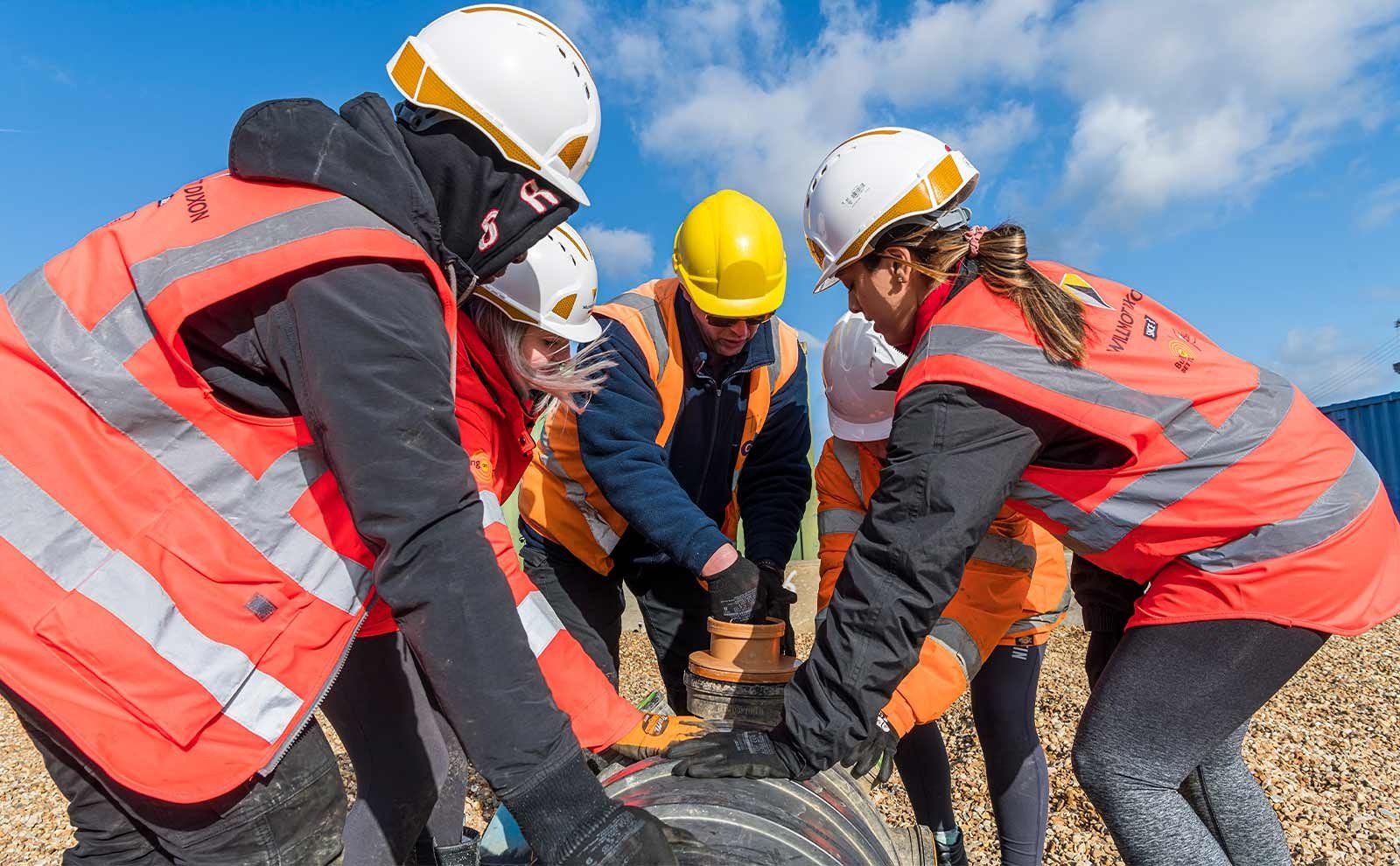
Groundworkers are the first trade on a construction and civil engineering site, and they prepare the site for the structural building works to take place
Qualifications: There are no formal qualifications; however, employers will typically value GCSEs in maths and English, Level 2 NVQ in Groundworker or completion of an apprenticeship
Salary:
Starting: £24,000
Experienced: £40,000
(please note these salaries are taken from Groundworker / Skills England and UK jobs groundworker and are not specific to our business)
Hours: 40-45 hours per week

Tiler
Tilers fix tiles to walls and floors in kitchens, bathrooms, shops and restaurants.
Qualifications: There are no specific qualifications; however, you can apply to apprenticeships such as Finishing Trades Level 2 Foundation Apprenticeship or a Wall and Floor Tiling Level 2 Intermediate Apprenticeship. If you are applying for an intermediate apprenticeship, you may need maths or English GCSEs.
For more information, visit: Tiler | Explore Careers | National Careers Service
Salary:
Starting: £21,000
Experienced: £38,000
(Please note these salaries are taken from Explore careers | National Careers Service)
Hours: 40-45 hours per week
You may occasionally work evenings/weekends